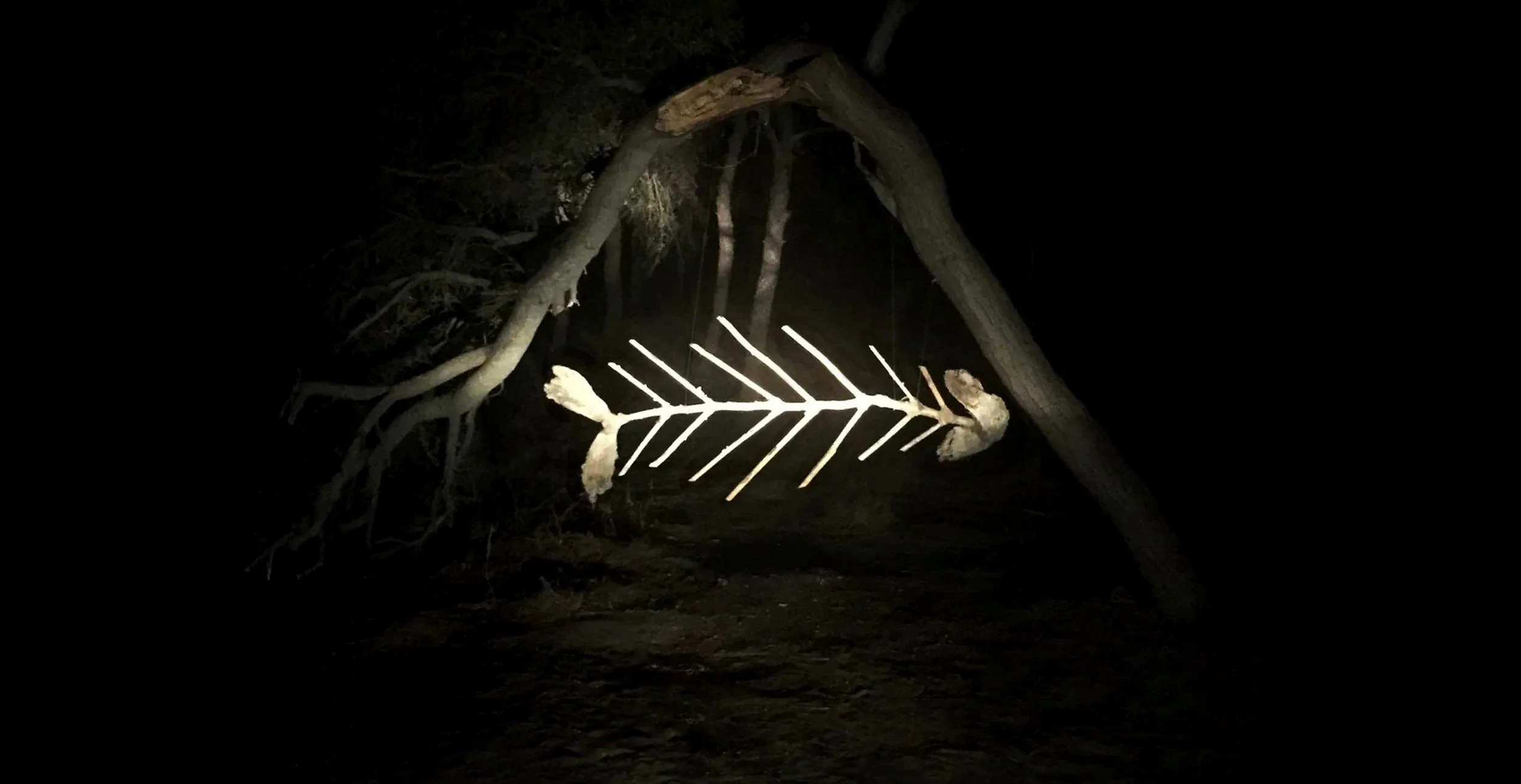
Fossile Contemporaneo
Site-specific Installation (cm 280 x 105)
2017
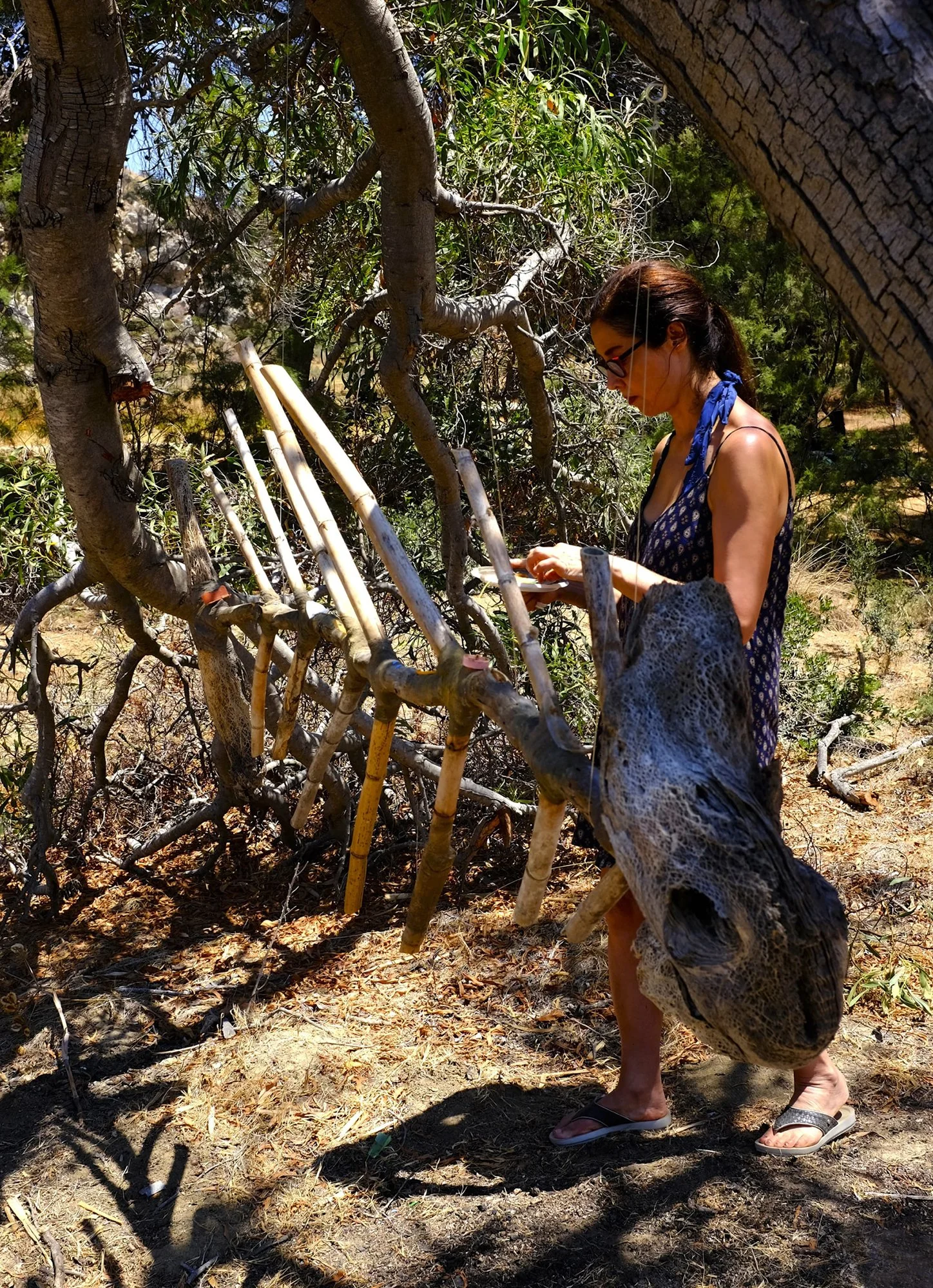
Fossile Contemporaneo is a fossil fish, a prehistoric animal rediscovered in the future. It is imagined as an archaeological find, a trace of the Anthropocene.

Materials and Construction
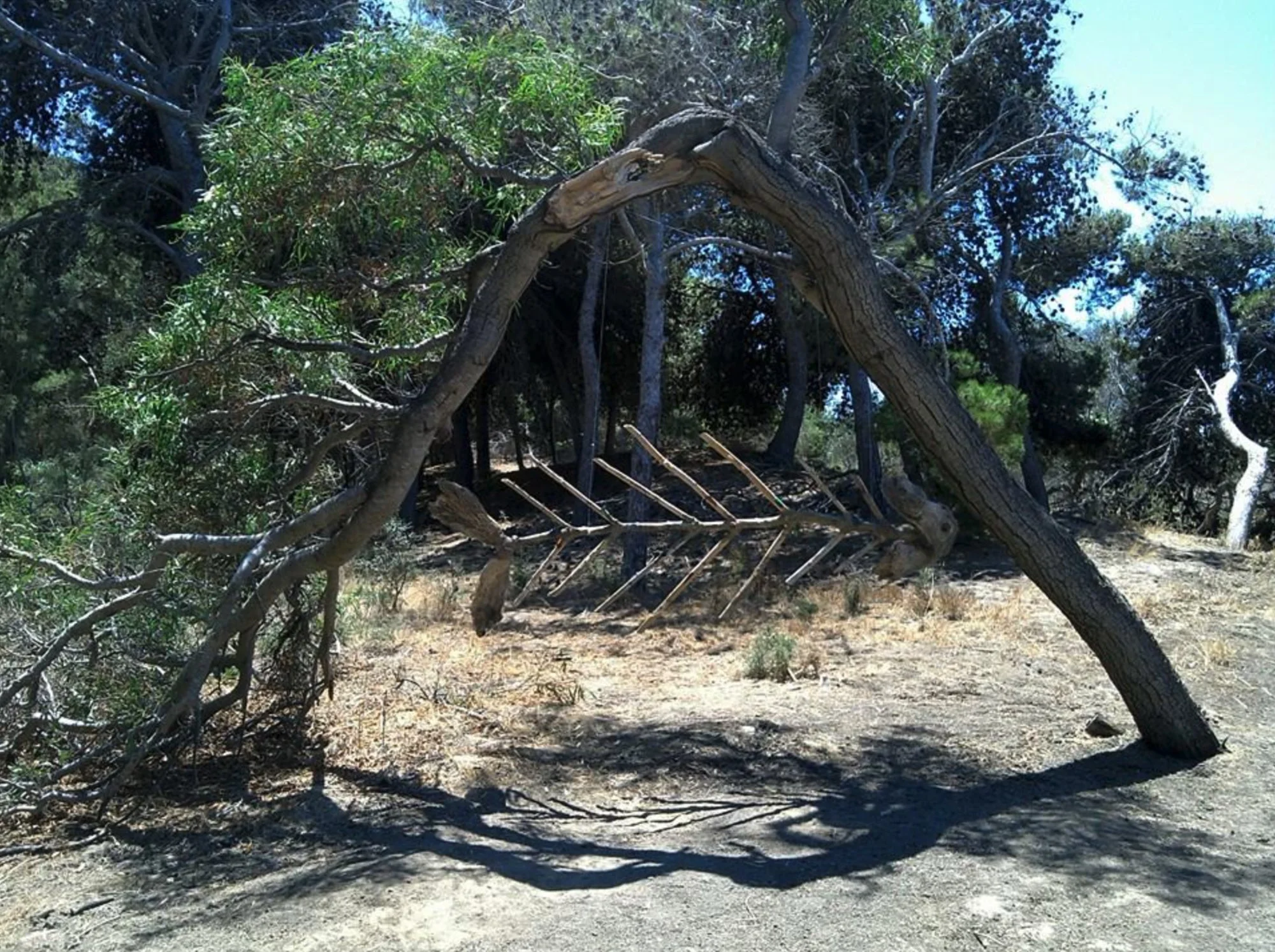
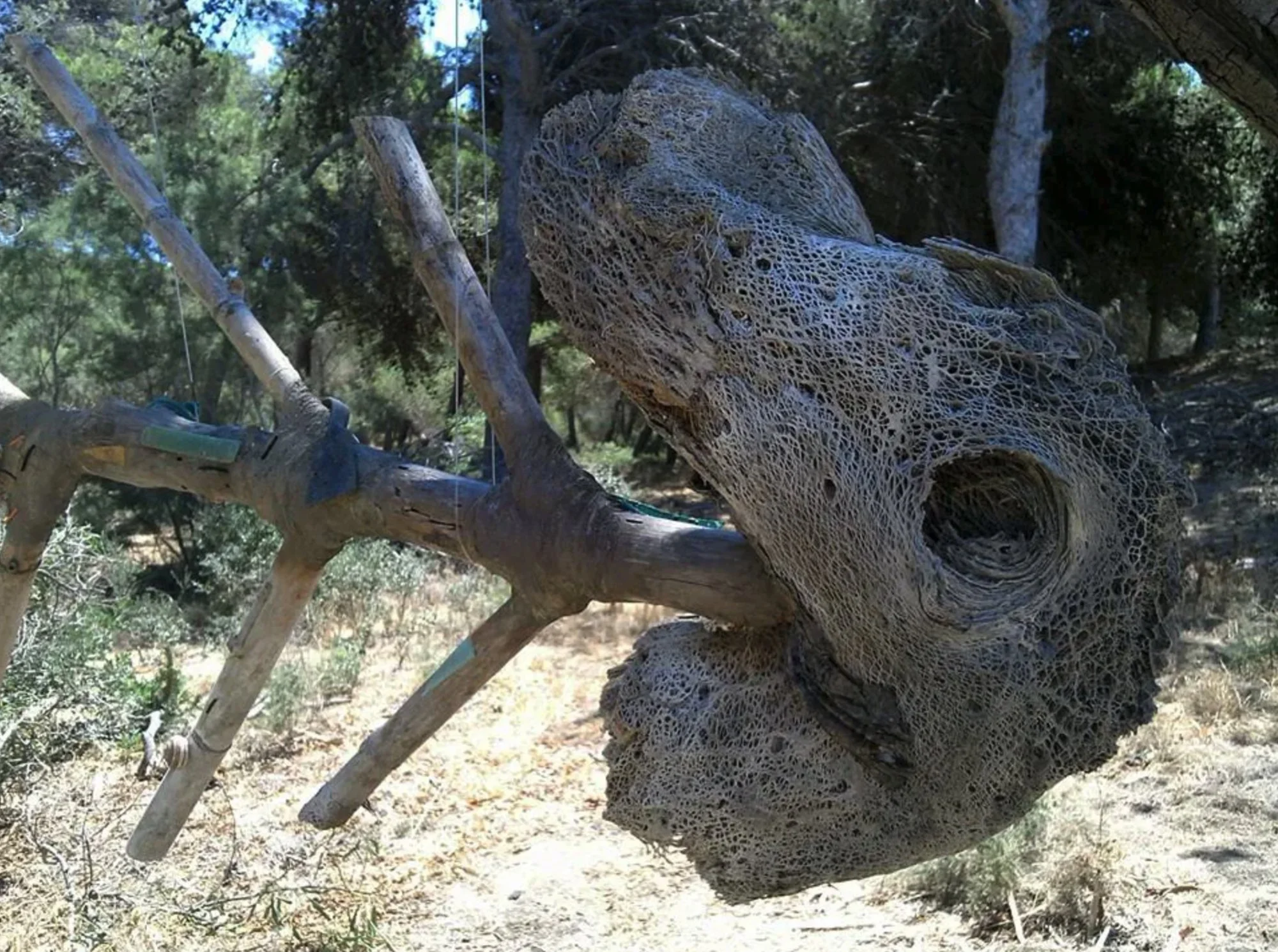
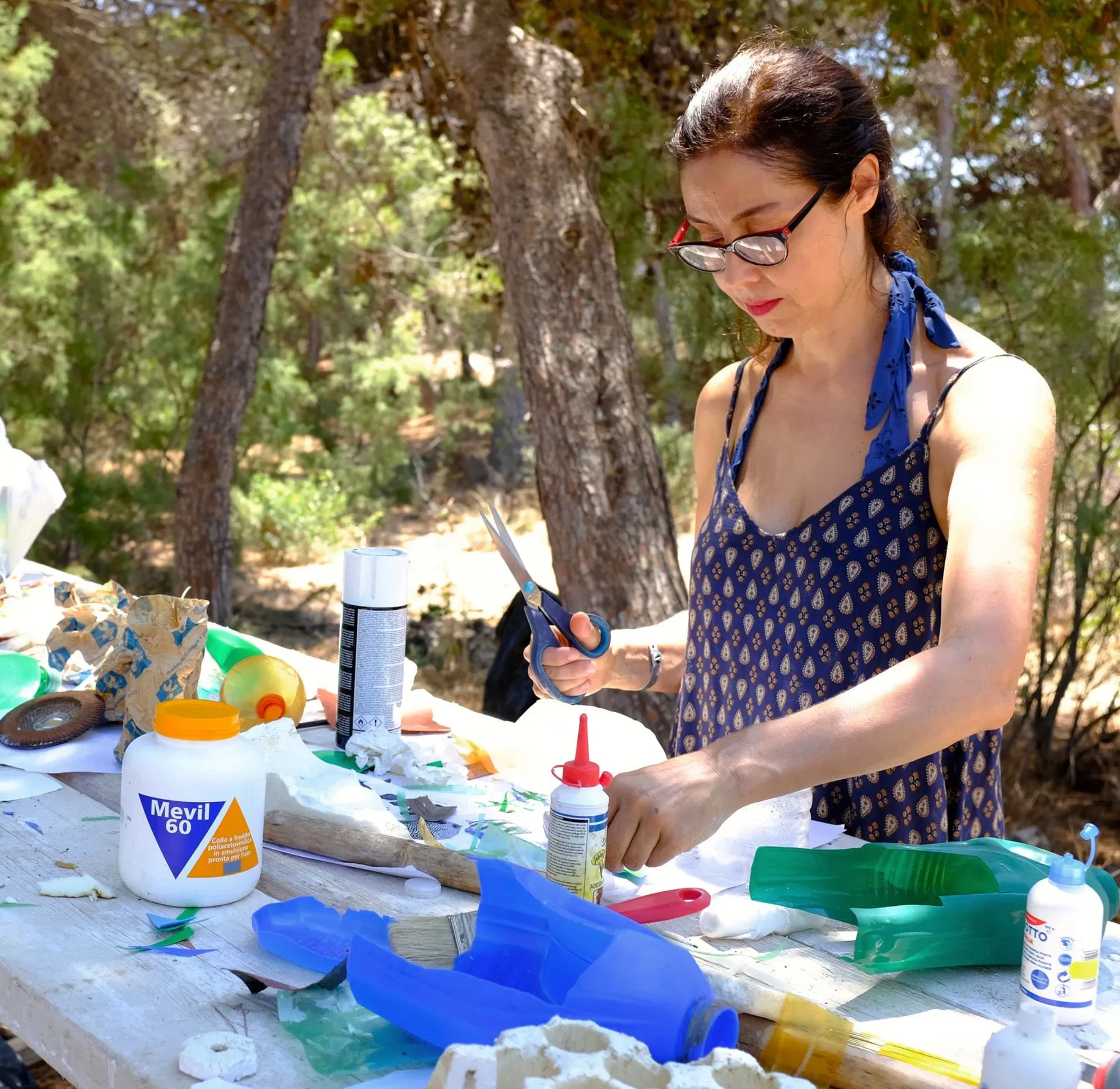
The work comprises beached materials and materials found in the woods: wood, bamboo canes, shells, as well as various types of plastic, pieces of iron, and glass. Among the bamboo canes are bottle caps, fragments of polyethylene, and small pieces of coloured plastic that form encrustations together with small crushed shells.
Microplastics and the Anthropocene
These fragments allude to microplastics, the danger of our era. They are tiny plastic particles, smaller than one millimetre, found in our seas. Today they represent a global threat to marine ecosystems, causing abnormal behaviour in fish and compromising their ability to reproduce.
They originate from cosmetics, industrial processes, soap abrasives, and the degradation of waste. They are released into water, broken down, ingested by fish, and enter the food chain, eventually reaching our tables. Researchers have defined this as a “plastic soup.”
In the oceans, it is estimated that every square kilometre contains approximately 63,000 plastic particles, and that production is continuously increasing, expected to quadruple by 2050.
Environmental Fragility
In the original installation, created in a natural setting, the work was supported by a broken, curved tree branch, representing the environmental fragility of our time.
The installation was created in 2017 on the beach at the mouth of the Platani River in Eraclea Minoa (Agrigento), in an area affected by arson. The work was subsequently presented in Sciacca in 2019 on the occasion of the European Night of Museums, and in 2022 at Palazzo D’Aumale in Terrasini, Palermo, as part of the exhibition Tra-ma-re, from the texture of the sea to the fabric of humankind.